How to use an African net sponge in 5 simple steps
Wet it, build a lather, use light pressure on the body, stretch it across your back, then rinse and hang it open. The texture should do the work; you do not need to scrub hard.
The Net Sponge · Updated 30 August 2026
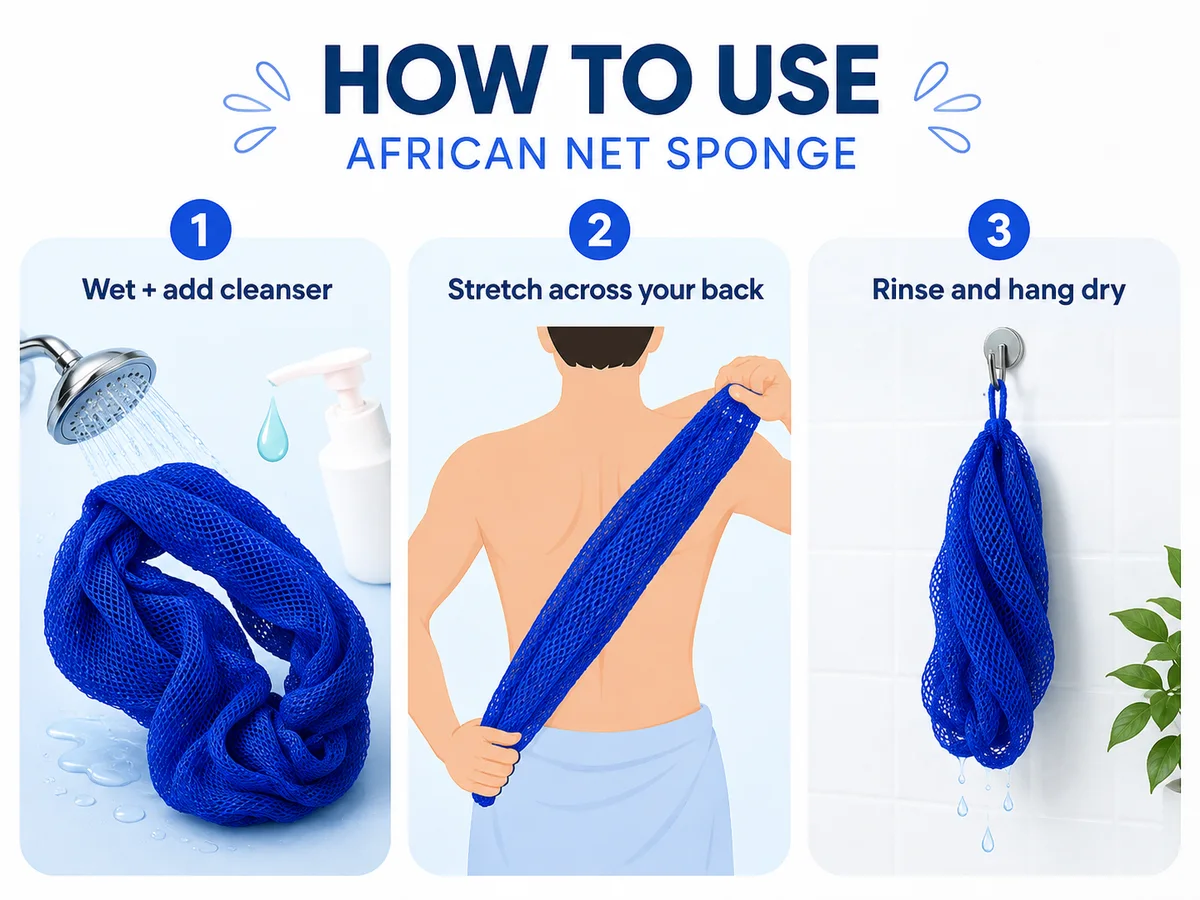
5 simple steps
- Rinse the net and wet your skin. On first use, give the net a thorough rinse. Lukewarm shower water is enough; there is no need to soak your skin for several minutes.
- Add soap or body wash. Scrunch the wet net in your hands and work in a small amount of cleanser until it lathers.
- Wash the body with light pressure. Fold or gather the net in your hand for arms, legs and torso. Use short, controlled strokes rather than pressing harder for more exfoliation.
- Stretch it across your back. Hold one end in each hand and move it gently side to side, like drying your back with a towel.
- Rinse and hang it open. Rinse your skin, then rinse soap and residue through the net. Squeeze gently and hang it spread out where air can circulate.
How hard should you scrub?
Much lighter than most first-time users expect. A net is already textured, so extra pressure mostly increases irritation. If it feels sharp, leaves your skin burning or causes redness that hangs around, reduce the pressure or stop using it.
How do you soften a new African net sponge?
If a new net feels too rough, start by rinsing or washing it according to the seller's care instructions, then try it on a small body area with very light pressure. There is no universal softening method because mesh fibre, dye and joins can vary between products.
Do not boil, bleach or use very hot water on an unknown net unless its care instructions explicitly allow it. If it still feels sharp or uncomfortable after normal washing, choose a softer net or a washcloth rather than trying to scrub through the discomfort.
How often should you use it?
If you are new to mechanical exfoliation, start once or twice a week with light pressure. If your skin stays comfortable, you can decide whether more frequent use adds anything. There is no prize for using it every day.
See our frequency guide for how to adjust around sensitive skin and other exfoliating products.
What should you use with it?
A mild body cleanser is enough. African black soap is often paired with net sponges, but it is optional; an ordinary body wash works too. You do not need a separate scrub or exfoliating wash at the same time. If you already use retinoids, benzoyl peroxide or exfoliating acids, be more conservative because irritation can add up.
A simple after-shower option
If your skin feels dry after showering, moisturiser is a simpler follow-up than adding another exfoliant. If you want a simple body moisturiser, the CeraVe option below is one place to start; check the live listing and ingredients to make sure it suits you.
Paid link
View CeraVe moisturiser on AmazonSigns you are overdoing it
- Redness that lasts well beyond the shower.
- Stinging or burning when you apply an ordinary moisturiser.
- New tightness, flaking or soreness.
- Skin that feels raw rather than simply clean.
- Dark marks appearing after irritation if you are prone to post-inflammatory pigmentation.
Looking for an African net sponge?
If you want the long, open-mesh format shown in this guide, you can check current US or UK availability below.
Paid links
Sources & further reading
- American Academy of Dermatology: safe exfoliation — light strokes, skin type, existing products and frequency
- AAD: keratosis pilaris self-care — gentle exfoliation rather than aggressive scrubbing