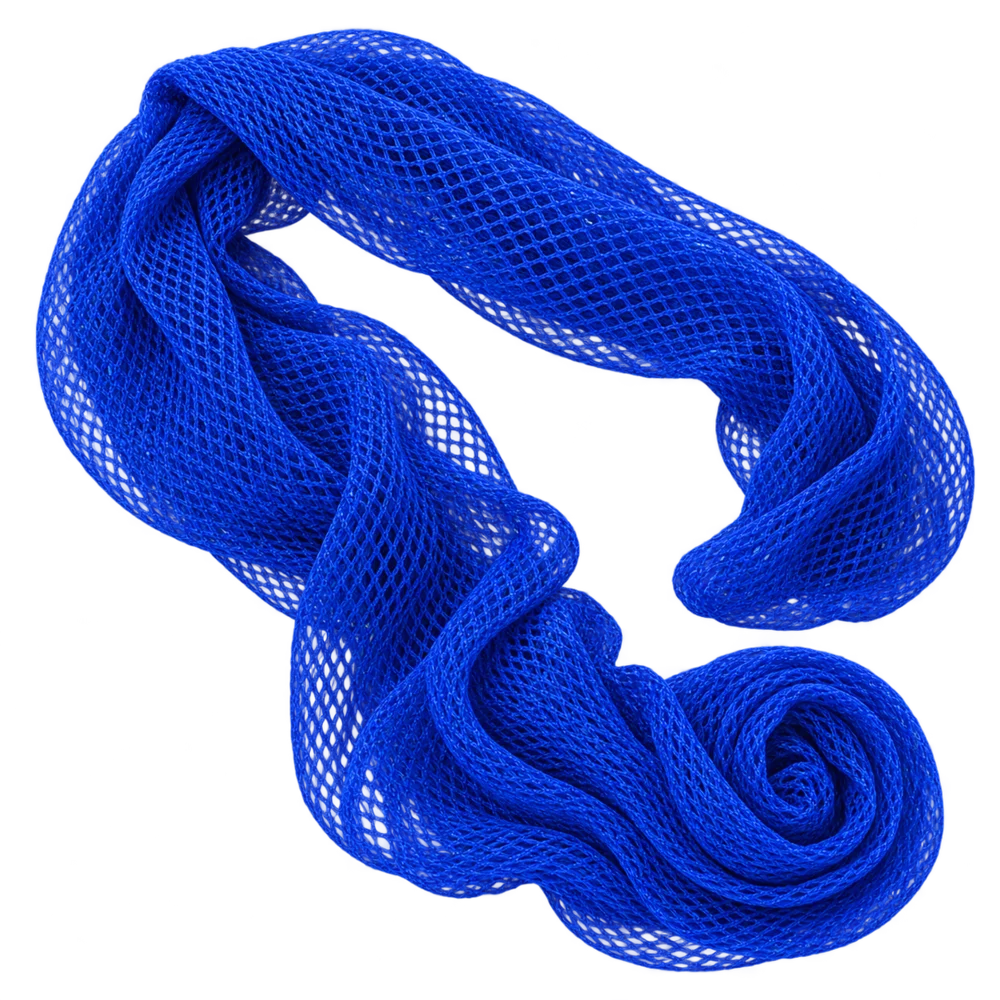
How to use a net sponge
Wet it, lather it, use light pressure and use the full length to wash your back.
Read the 5-step guide →If you want a long mesh body scrubber that reaches your back, lathers well and dries more openly than a loofah, start here. We cover what to look for, how to use it properly and where to check current shopping links.
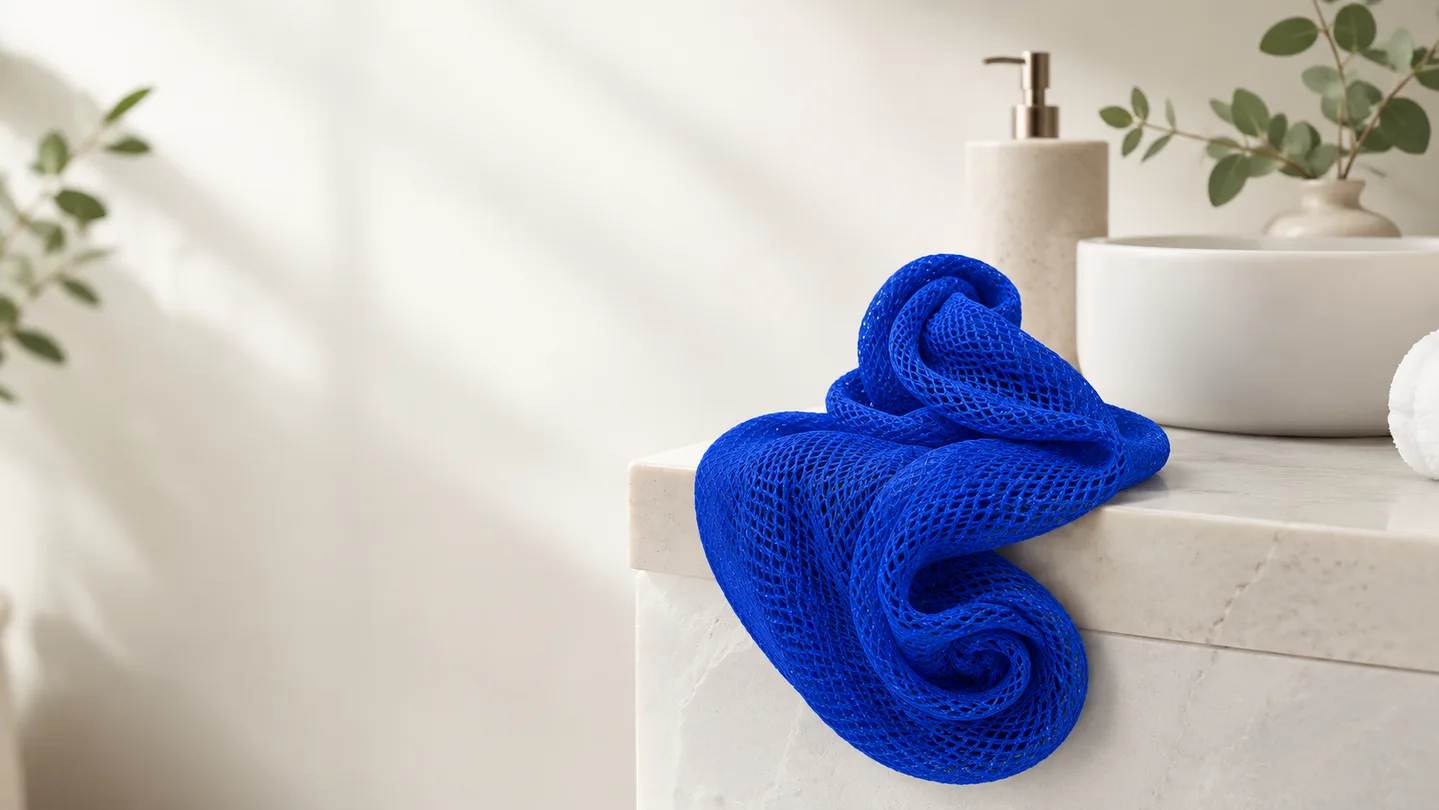
It is a long, stretchy mesh bathing cloth widely used in West African bathing routines. You may also see the same format described as an African exfoliating net, bath net, body scrubber, back scrubber or Sapo sponge. “Sapo” (also written Sapɔ) is a name used for this kind of bathing net in Ghanaian contexts. Scrunched in the hand, it works like a textured washcloth; opened out, its length makes the back much easier to reach.
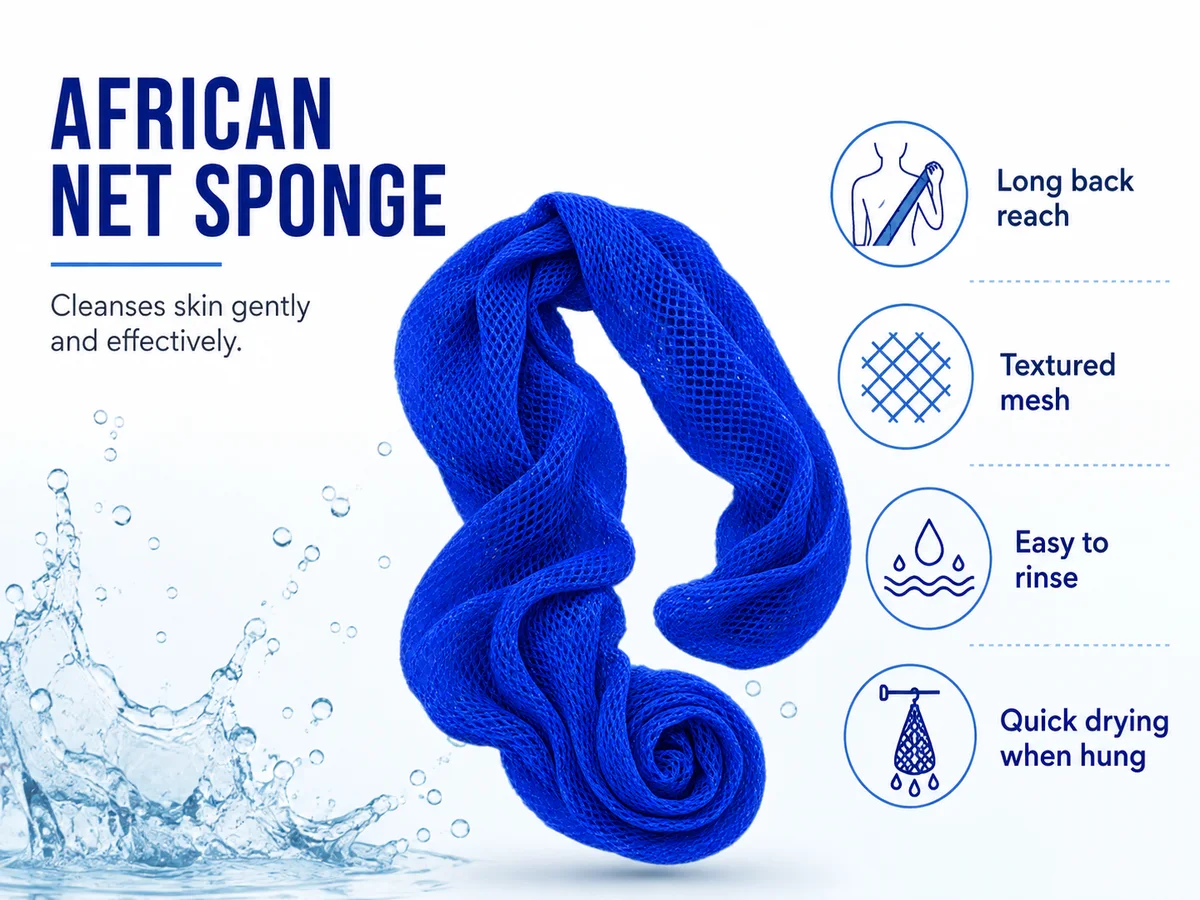
For a first net, prioritise useful length, clear material and dimension information, and a seller with straightforward returns. Use the links below to check current US or UK availability.
A sensible starting format if your main goals are easier back reach, a textured body wash and a mesh that can be rinsed through and hung open afterwards.
Paid links
No offer showing? Browse current US results or browse current UK results.
The same questions come up again and again: is it too rough, how do you clean it, how often should you use it, and how can you tell whether a listing is any good?
Wet it, lather it, use light pressure and use the full length to wash your back.
Read the 5-step guide →Compare reach, texture, rinsing and drying before deciding which format suits you.
See the comparison →A simple after-shower routine, plus what to do about machine washing, boiling and replacement.
Cleaning guide →Start conservatively, then adjust based on pressure, skin comfort and the rest of your routine.
Find a starting point →Length, weave, joins, care instructions and seller clarity matter more than dramatic marketing.
Open the buying guide →Knots can tell you something about construction, but they are not a universal proof of origin or quality.
Read the authenticity guide →Wet the net, add a mild cleanser, use short light strokes, rinse well and hang it open afterwards. For your back, hold one end in each hand and move it gently side to side.
Do not scrub over broken, sunburned or already-irritated skin. If ordinary moisturiser stings afterwards, that is a good sign to use less pressure or exfoliate less often.
Full step-by-step guide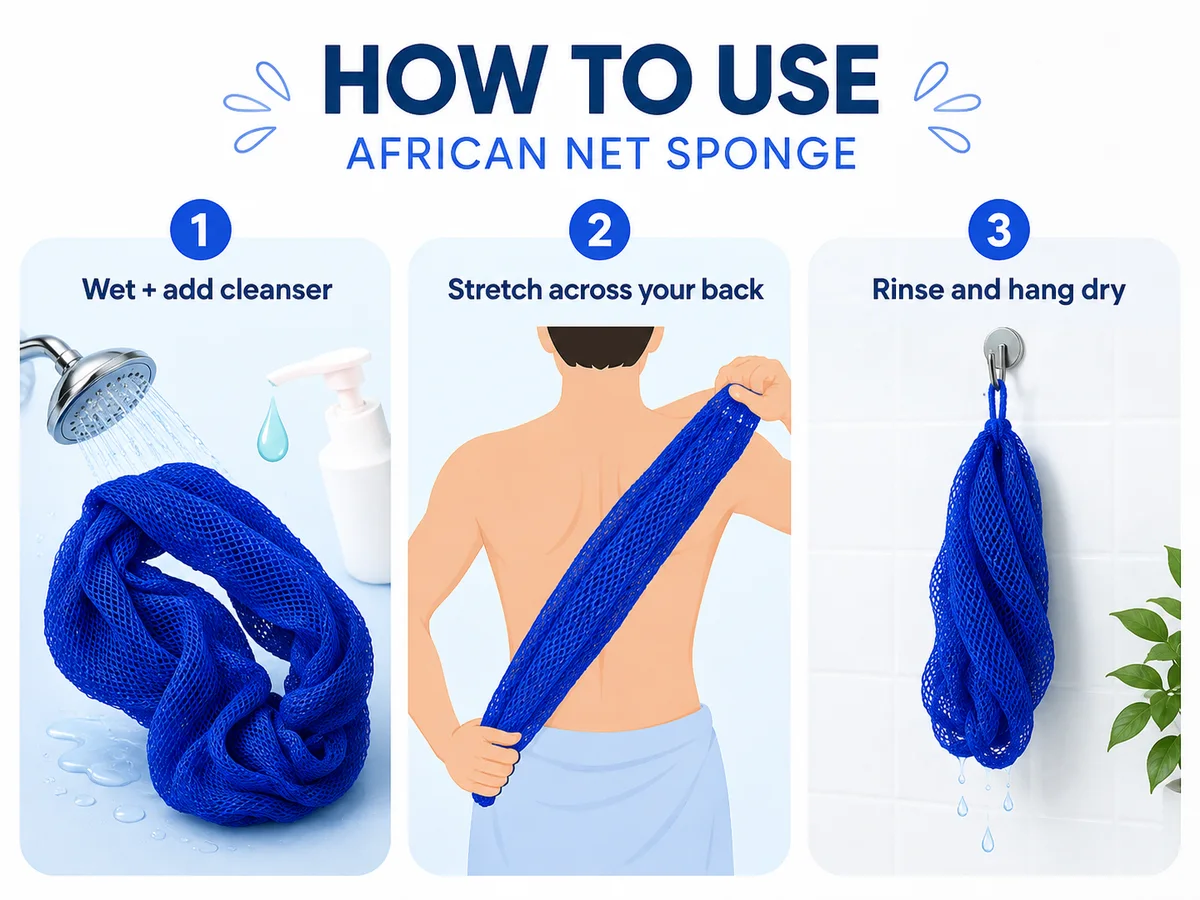
Choose the net for reach and an open mesh you can spread out to dry. Choose a softer cloth or pouf if the net feels too scratchy for your skin.
Daily use is not automatically better. If you are new to it, start with light pressure once or twice a week and increase only if your skin stays comfortable. Tightness, stinging, soreness or persistent redness are reasons to cut back.
We recommend keeping a textured body net off the face. Facial skin is easier to irritate, and there is little upside to using a coarse body scrubber there.
No reusable shower tool is bacteria-proof. The useful feature of an open net is that you can rinse it through and spread it out to dry. It still needs cleaning and complete drying between uses.
It should feel textured, but it should not hurt. Start with very light pressure on a small body area. If it feels sharp, leaves your skin burning or causes lasting redness, stop using it or switch to a softer option.
There is no useful universal lifespan. Replace it when the mesh is torn or distorted, the joins become uncomfortable, residue no longer rinses out properly, or an odour remains after washing and drying.
Do not rely on one visual rule. Knots, colour or roughness are not universal proof. Check the stated material, dimensions, construction photos, country-of-origin claims, care instructions and seller transparency.
Often, yes. “Sapo” or “Sapɔ” is used in Ghanaian contexts for this style of bathing net. Names vary between sellers and countries, so check the actual material, dimensions, construction and sourcing rather than treating the label alone as proof of quality or origin.