African net sponge vs loofah: which is better?
Choose an African net sponge if back reach, a firmer scrub and an open mesh you can spread out after use matter most. Choose a softer cloth or pouf if the net feels too scratchy or your skin is easily irritated.
The Net Sponge · Updated 30 August 2026
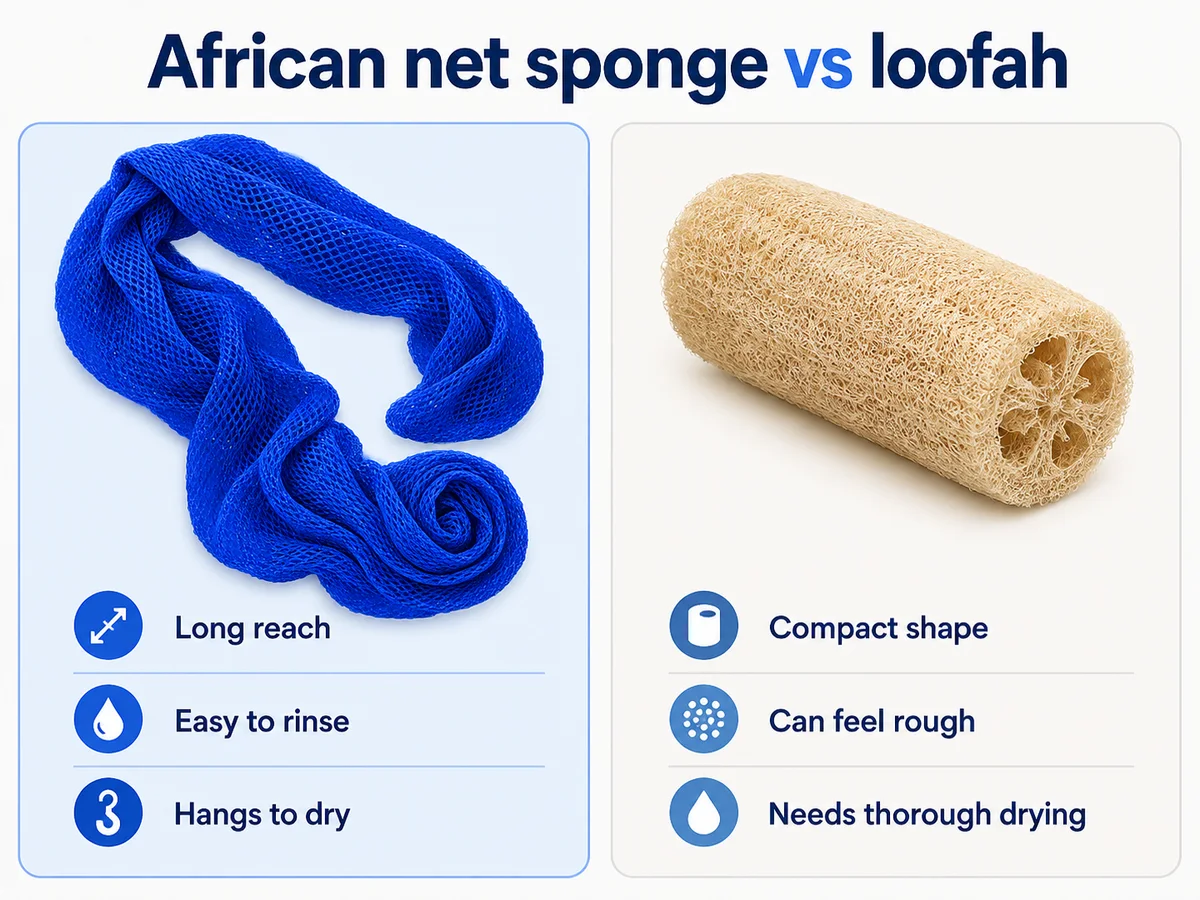
Quick comparison
| Factor | African net sponge | Loofah / shower pouf |
|---|---|---|
| Back reach | Excellent — long enough to hold at both ends. | Usually shorter; awkward for the middle of the back. |
| Feel | More textured. Pressure makes a big difference. | Varies; many synthetic poufs feel softer. |
| After use | Can be opened out, rinsed through and hung as a thin mesh. | Bunched shapes have more folds and contact points. |
| Cleaning | Rinse thoroughly and hang fully open. | Also needs thorough rinsing, regular cleaning and complete drying. |
| Exfoliation | Usually the stronger-feeling option. | Often milder, depending on the material. |
| Best fit | Reach + lather + a firmer body scrub. | Softer feel + familiar shower routine. |
Which is easier to keep dry?
The net has a practical advantage: you can open the mesh, rinse through it and hang it with a lot of surface area exposed to air. A bunched pouf or loofah has more folds where water and residue can stay trapped.
That does not make a net bacteria-proof. Cleveland Clinic's loofah guidance makes the general point well: reusable shower tools should be rinsed, cleaned and allowed to dry rather than left damp.
Which feels gentler on skin?
A soft pouf or washcloth will often feel gentler. An African net sponge is popular partly because it is more textured, but that same texture can be too much for some people. The American Academy of Dermatology recommends light strokes with mechanical exfoliation and notes that dry, sensitive or acne-prone skin can be easier to irritate.
What about a washcloth or exfoliating gloves?
| Tool | Useful when… | Main trade-off |
|---|---|---|
| African net sponge | You want long back reach, noticeable texture and an open mesh that can be spread out after use. | Can feel too abrasive if you use too much pressure or have easily irritated skin. |
| Washcloth | You prefer a softer, familiar option with precise control over where you wash. | Shorter reach makes the middle of the back harder to wash; it still needs thorough laundering and drying. |
| Exfoliating gloves | You like close hand control and a textured scrub on arms, legs and torso. | Back reach is limited and it is easy to add too much pressure because the abrasive surface sits directly on the hand. |
None of these tools is automatically the most hygienic or the best for every skin type. Whichever reusable tool you choose, rinse it thoroughly, let it dry fully between uses and reduce friction if your skin becomes sore or irritated.
Which should you choose?
Choose a net sponge if…
- You want to reach your back without a handled brush.
- You like a noticeable body scrub but can use light pressure.
- You want a mesh you can spread open to rinse and dry.
Choose a softer option if…
- Your skin is easily irritated by rubbing.
- You already use retinoids, benzoyl peroxide or exfoliating acids and your skin is often dry or sensitive.
- You tend to scrub hard rather than letting the texture do the work.
Want to try the net format?
If the back reach and open-mesh design sound useful, use the links below to check current US or UK availability.
Paid links
No offer showing? Browse current US results or browse current UK results.
Sources & further reading
- American Academy of Dermatology: safe exfoliation — skin type, light pressure and irritation
- Cleveland Clinic: loofah hygiene — cleaning and drying reusable shower tools